
Shoot Die Repeat
Heseri GamesAction
3.1147.00 Reviews
- Version
- 1.4.10
- Installs
- 100.00K
- Age Rating
- Everyone 10+
Screenshots
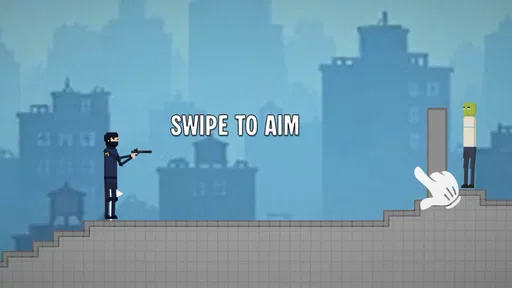
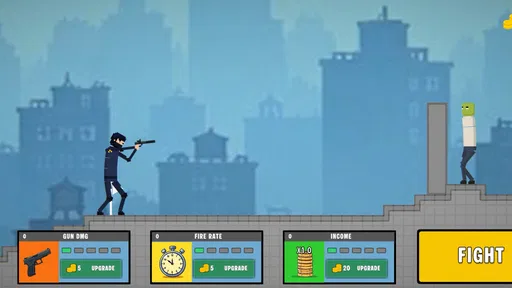
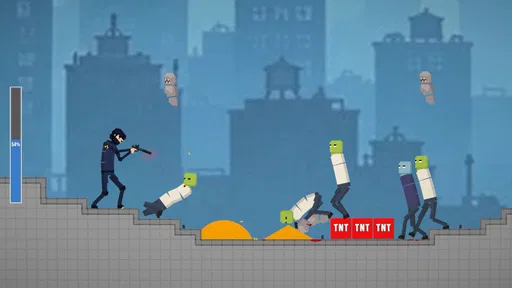
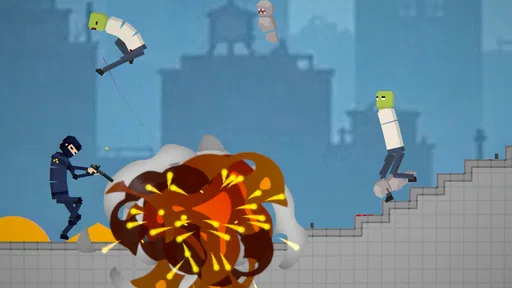
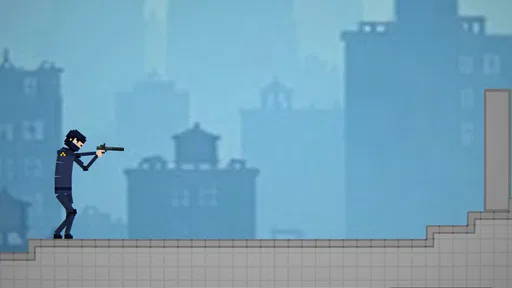
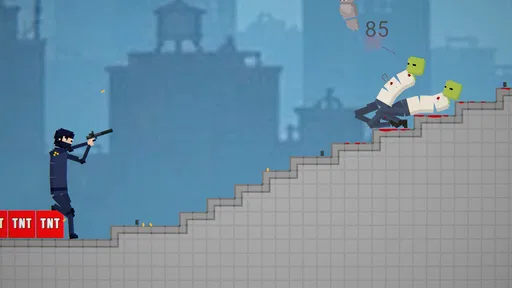
Our Review of Shoot Die Repeat
 Analysis by Appyee
I went into Shoot Die Repeat expecting a quick action game built around a simple loop, and that is exactly where its appeal begins. The idea is easy to understand: fight, fail, learn from the attempt, and use that failure to become stronger. It is a compact premise, but it can be surprisingly effective when I only have a few minutes and want something more active than a casual puzzle.
My overall view is mixed. The game has a clear identity and a useful pick-up-and-play structure, but it also asks for patience. Its low average rating of 2.0 from roughly two hundred ratings suggests that many players have found the experience less satisfying than the central idea promises. I can understand both reactions. The repeat-and-improve concept gives the action a reason to continue, yet the enjoyment depends heavily on whether I like retrying the same challenge and accepting gradual progress.
How the repeat-based action loop feels in practice
Heseri Games has built this as a free action game for players who enjoy short combat sessions rather than a long, story-heavy adventure. The store summary, “Get stronger every time you die,” explains the main attraction without needing a complicated setup. I do not need to learn a large world or remember a detailed plot before playing. The important question is simply whether each failed attempt makes me feel better prepared for the next one.
That structure changes the way I judge a defeat. In a conventional action game, losing can feel like wasted time, especially when I have to repeat a long section. Here, the premise encourages me to treat failure as part of the route forward. A bad run can still be useful if it teaches me when to attack, when to hold back, or which decisions are too risky. The strongest part of the design is its ability to turn failure into motivation instead of a full stop.
It is also a good fit for short breaks. I can imagine opening it while waiting for transport, taking a few attempts, and closing it without needing to reserve an entire evening. That does not mean every session feels equally rewarding. The loop works best when I am in the mood to improve through repetition. If I want constant novelty, a relaxed pace, or a game that lets me win without much resistance, this is not the right kind of action title.
Why the simple premise works
The “shoot, die, repeat” idea gives the game a clear rhythm. I know what I am supposed to do, and the consequences of failure are part of the appeal rather than an unexpected punishment. That clarity matters on mobile, where overly complicated controls or lengthy tutorials can make a game feel like work before the fun begins.
There is a useful psychological difference between restarting because I made a mistake and restarting because the game expects me to grow over time. The latter feels more deliberate. I can focus on small improvements instead of demanding a perfect run immediately. For players who enjoy action games with a retry mentality, that can create a satisfying sense of momentum even when progress comes in small steps.
Still, the concept is only as strong as the feedback around it. If a defeat does not clearly show what I should change, repetition becomes routine rather than learning. That is where my enjoyment becomes more dependent on personal tolerance. I am willing to repeat an encounter when I can identify a lesson. I am much less patient when the next attempt feels like a nearly identical roll of the dice.
What I would pay attention to during a session
My first practical tip is to avoid treating every attempt as a race. The permanent-growth idea rewards observation. I would use an early run to watch enemy timing, notice dangerous spaces, and identify which attacks are safe to repeat. Trying to force progress immediately can hide the information that makes the next attempt easier.
My second tip is to set a stopping point before frustration takes over. A repeat-focused action game can encourage the thought that one more try will solve everything, even when my attention is already slipping. Short sessions are a strength here, so I would use them deliberately: play until I learn something useful, then return later instead of turning a promising loop into a tiring grind.
A third insight is that the game should be judged by progress across several attempts, not by the first few minutes alone. The opening experience may feel harsh if I expect immediate power or rapid victories. The premise asks me to value accumulated improvement, so I would give it enough time to show whether that improvement feels meaningful. If repeated deaths still feel empty after I understand the rhythm, that is a sign the game may not suit me.
Where the experience loses momentum
The biggest weakness is the risk of repetition without enough emotional payoff. A death-based progression loop can be elegant, but it can also expose every thin spot in the design. When I fail, I want to know that the next run has a realistic chance of being better because of something I learned or gained. If that connection feels weak, the core promise starts to sound more attractive than it feels.
The rating history gives me reason to approach this cautiously. An average of 2.0 is not a small warning for someone choosing between several free action games. It does not tell me that every player will dislike the game, but it does suggest that the central loop has not worked consistently for its audience. I would not recommend downloading it expecting a universally smooth experience.
Free access helps lower the barrier to trying it, but free-to-play design can still affect how comfortable a player feels over time. The game includes in-app purchases ranging from $2.99 to $14.99 per item. That is important for anyone who prefers a completely uninterrupted progression path. Before spending anything, I would first decide whether the basic loop is enjoyable on its own. A purchase should improve convenience or expression for a game I already like, not rescue a loop that has failed to hold my attention.
The age label is Everyone 10+, which makes it more approachable for families and younger players than many aggressive action games. Even so, the retry structure may be more frustrating for a child who expects immediate success. I would pay attention to temperament rather than relying on the age label alone. A patient player who enjoys learning from mistakes may have a better time than someone technically old enough for the game but easily discouraged by repeated failure.
Questions I would answer before installing
Is it free to start? Yes. The game is listed as free, so I can try the central experience without paying an entry fee. I would still remember that optional purchases are present and avoid assuming that every progression-related convenience is included at no cost.
Does it suit a player who wants a story? Probably not as my first choice. The appeal described by the game is action and repeated improvement, not narrative discovery. If my priority is characters, dialogue, exploration, or a campaign that constantly introduces new story material, I would look toward a different kind of mobile game.
Is it suitable for short sessions? That is one of its clearest potential strengths. The retry format naturally supports brief play, and I do not need to make it a major daily commitment. The trade-off is that short sessions may still feel repetitive if I am not enjoying the learning process itself.
Will every player enjoy the difficulty? No. The game is aimed at people who can accept failure as part of progress. Players who prefer forgiving action, automatic advancement, or a steady stream of uncomplicated victories should skip it. The low average rating reinforces that this is not a safe recommendation for everyone.
What device support should I expect? The listed minimum operating system is 7.1, which gives it a broad starting point for compatible mobile devices. I would still keep expectations sensible on older hardware, because an operating-system requirement alone does not tell me how comfortable the controls or performance will feel on every phone.
Who gets the most from this game
I would recommend it first to players who enjoy roguelike-style thinking without needing a large presentation around it. The important personality trait is not simply liking shooting games. It is being comfortable with the idea that a failed attempt can be productive. If I enjoy testing a new approach, remembering a mistake, and trying again with a small advantage, the design has a fair chance of working for me.
It can also suit someone looking for a low-commitment action game. I do not need to organize a long play session or follow a complex schedule. A few attempts can provide a focused break, especially when I want something more engaging than passive scrolling. In an everyday situation, I could use it during a short waiting period, play until I identify one mistake in my approach, and stop before the session becomes frustrating.
I would be more hesitant to recommend it to a player who wants polished variety above all else. Traditional action games with level-based campaigns may offer clearer goals, more predictable progression, and a stronger sense of moving from one distinct stage to another. Competitive shooters may be a better choice for someone who wants human opponents and unpredictable matches. Relaxed arcade games may be better for someone who wants quick entertainment without the pressure of repeated defeat.
That comparison is important because the game’s slogan-like premise can make it sound more universally exciting than it is. The loop is specific. It is not trying to replace every mobile action experience. Its value depends on whether the player sees repetition as a challenge to solve rather than a lack of content. I would choose it over a conventional campaign when I want compact retries, but I would choose a conventional campaign when I want exploration and a sense of steadily visiting new places.
How I would approach progression
I would keep a simple mental record of what caused each failed run. Was I too aggressive? Did I ignore an enemy pattern? Did I spend a stronger option too early? This sounds basic, but it prevents the game from becoming a blur of identical attempts. The most useful progress is not always the visible increase in strength; sometimes it is knowing which decision not to repeat.
I would also avoid spending immediately. Because the game is free and offers purchases, the sensible workflow is to test the unmodified experience first. I would play enough to decide whether the action feels responsive and whether the repeat loop gives me a reason to return. If the answer is no, buying an item will not solve the underlying mismatch between the game and my preferences.
For a younger player, I would treat purchases as a separate conversation from play. The Everyone 10+ label makes the game accessible, but the presence of individual items means it is worth agreeing on boundaries before handing over the device. That is practical advice rather than a criticism of the action itself: free installation and optional spending are two different decisions.
My final recommendation
Shoot Die Repeat has a focused idea and a clear audience. I like the fact that it does not pretend failure is an accident; failure is the engine of the experience. When I approach it patiently, the loop can make a short session feel purposeful. The best moments come from recognizing a mistake, changing one decision, and seeing that change carry into the next attempt.
But I cannot overlook the rougher side. The low average rating, the possibility of repetitive runs, and the optional purchase range make this a game I would recommend selectively rather than automatically. It is free to try, which is its biggest advantage for undecided players, but I would not tell a friend to spend money until the basic action has already earned that confidence.
The current version is 1.4.8, and the game has passed fifty thousand installs, so it has attracted a meaningful number of players without becoming an obvious universal hit. That places it in the category of a curious trial rather than a guaranteed recommendation. I would install it if I specifically wanted a compact action game built around repeated attempts and gradual strengthening.
My verdict: try it if failure motivates you, skip it if repetition drains you. Heseri Games has a premise with real potential, but the experience asks the player to supply patience and a willingness to learn from setbacks. For the right person, that is enough to make the loop engaging. For everyone else, a more varied action game with clearer stage-to-stage progression will probably be the better use of time.
Verdict
Strengths of Shoot Die Repeat
- Fast-paced runs make each session exciting and easy to replay.
- Simple controls let new players start shooting immediately.
- Repeated attempts make learning enemy patterns feel rewarding.
- Compact levels suit short gaming sessions on mobile.
- Distinct weapons add variety to combat and experimentation.
Limitations of Shoot Die Repeat
- Difficulty can rise sharply, causing frustrating early failures.
- Repetition may feel monotonous after mastering the available stages.
- Frequent action can drain battery on older devices.
- Limited progression may disappoint players seeking long-term depth.
- Touch controls can feel imprecise during hectic encounters.
Other Releases by Heseri Games
View All
Car Evolve
Simulation3.1

Real War: Not Fake
Action3.3
Similar Picks in This Category
View All
Temple Run 2: Endless Escape
Imangi Studios4.1

PUBG MOBILE
Level Infinite4.3

Free Fire: 9th Anniversary
GARENA INTERNATIONAL I4.4

Talking Tom: Hero Dash Run
Outfit7 Limited4.3

slither.io
Lowtech Studios3.9

Sniper 3D:Gun Shooting Games
Wildlife Studios4.6
Frequently Asked Questions
What is Shoot Die Repeat, and how does the gameplay work?
Shoot Die Repeat is an action-focused game built around fast shooting, repeated attempts, and learning from each failure. You control a character through dangerous encounters, defeat enemies, avoid hazards, and improve your performance with every run. The title encourages experimentation, since dying is part of the progression rather than simply a punishment. Players who enjoy challenging arcade-style gameplay and short, replayable sessions will likely find its core loop appealing.
Is Shoot Die Repeat difficult for new players?
The game can be challenging, particularly during the first few attempts, because enemies, traps, timing, and movement require quick reactions. However, the repeated-run structure gives you time to understand attack patterns and discover safer strategies. Beginners should expect some trial and error instead of immediate success. If you prefer games that reward patience, memorization, and gradual improvement, the difficulty can feel satisfying rather than unfair.
Does Shoot Die Repeat require an internet connection?
Whether a constant connection is required may depend on the version and platform available through the official store. Core gameplay is generally suited to short sessions, but features such as advertisements, cloud synchronization, updates, leaderboards, or in-app purchases may need internet access. Before downloading, check the store listing and the permissions shown for your device. This is especially important if you plan to play while traveling or using mobile data.
Are there advertisements or in-app purchases in Shoot Die Repeat?
The monetization model can vary according to the release, operating system, and region. Some versions of games in this genre use optional purchases for upgrades, extra content, or convenience, while advertisements may appear between attempts or after completing a run. We recommend reviewing the official Google Play or App Store listing before installing, particularly if the game will be used by children. Also check whether purchases can be disabled through your device settings.
Which devices can run Shoot Die Repeat smoothly?
Shoot Die Repeat should be downloaded from an official Android or iOS store so you can confirm the current compatibility requirements. Performance may differ depending on your phone or tablet’s processor, available memory, operating-system version, and free storage. Older devices might experience slower loading, reduced visual quality, or occasional frame-rate drops. Keeping the system updated and closing unnecessary background apps can help, although the exact experience depends on your hardware.
Play our best games!


